How To Do A Squat Properly And Why You Should Do Them
Ask a trainer which body parts people most want to change and you will hear the same three answers: belly, thighs and backside. Spot reduction does not exist, but there is one exercise that trains almost your whole lower body and core at once and burns plenty of energy doing it: the squat.
Like the push-up, the squat recruits a lot of muscle. Your quadriceps, hamstrings, glutes and calves do the moving, while your core and back work hard to keep you balanced. That is why a set of 20 good squats leaves you breathing hard. It is also why form matters so much: done badly, squats waste effort and can strain your knees or lower back.
Setting up
Before you add any weight, learn the position:
- Stand with your feet about shoulder-width apart or a little wider, toes turned out slightly.
- Let your arms hang loose or hold them out in front for balance. Relax your shoulders and breathe.
The four cues: stay relaxed, chest up, brace your abs, squeeze your glutes on the way up.
Your first squat: the box squat
If you are new to squatting, stand in front of a sturdy chair or bench. Push your hips back and lower yourself as if you are sitting down, keeping your chest up and your weight spread across your whole foot with a bias towards your heels. When your backside lightly touches the seat, stand back up, breathing out and squeezing your glutes. That is one rep. A mirror to your side helps you check that your back stays neutral.
The bodyweight squat
Once the box squat feels easy, try it without the chair:
- Breathe in as you push your hips back and bend your knees.
- Keep your knees tracking in line with your toes. Do not let them cave inwards.
- Keep your back neutral, neither rounded nor over-arched, and your chest up.
- Lower until your thighs are about parallel to the floor, or as deep as you can go with good form.
- Breathe out and drive back up through your whole foot, squeezing your glutes at the top.
A note on knees: older advice said your knees should never travel past your toes. For most healthy people some forward knee travel is natural and fine, especially if you are tall or have long thighs. What matters more is that your heels stay down, your knees follow your toes and the movement is pain-free.
Adding weight
When you can do three sets of 12 to 15 controlled bodyweight squats, start adding load: hold a dumbbell or kettlebell at your chest (the goblet squat), then progress to a barbell in a squat rack. Increase gradually. Even experienced lifters have got stuck at the bottom of a heavy squat, which is why racks have safety bars. Set them, and ask for a spot if you are unsure.
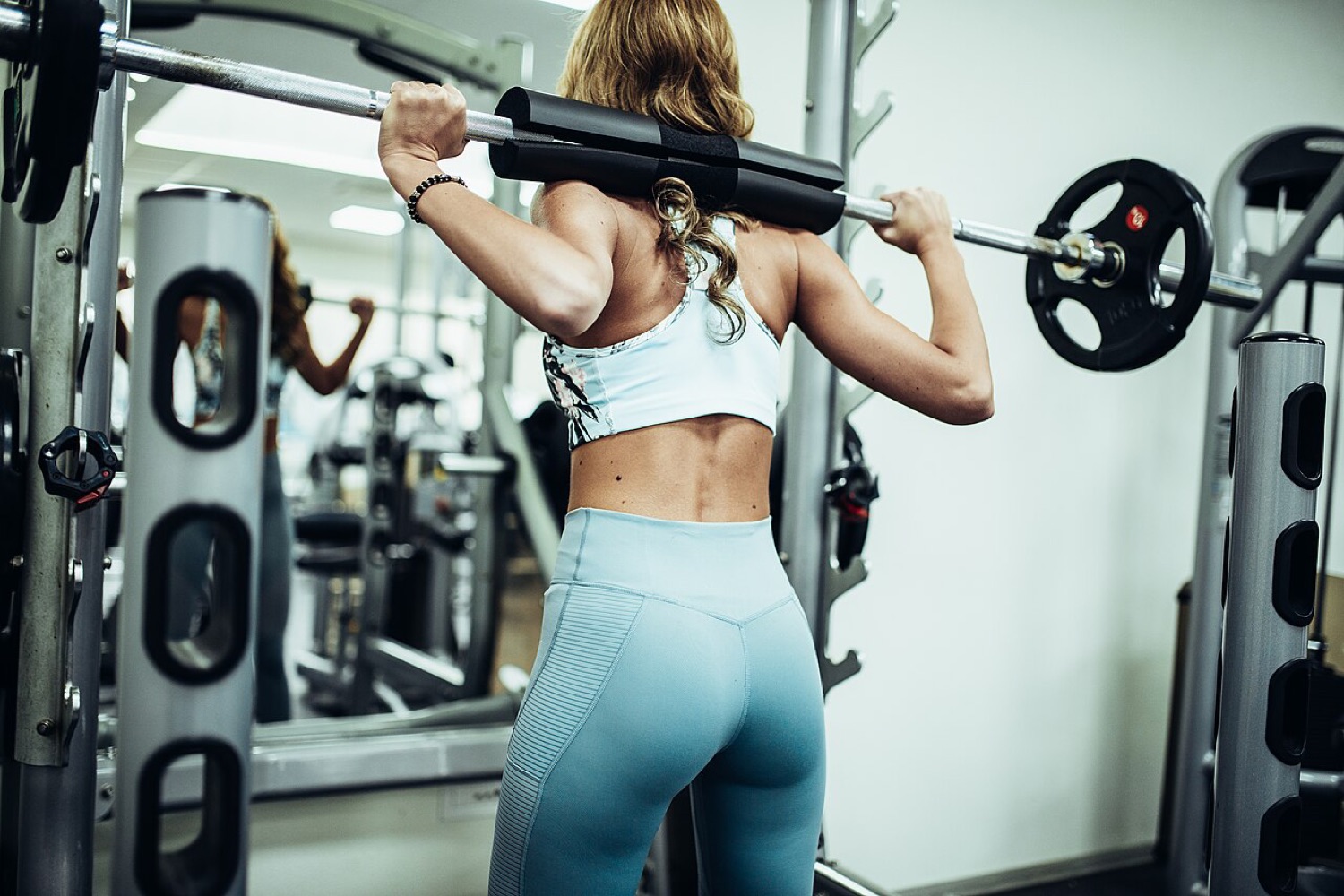
For a barbell back squat, rest the bar across the muscle of your upper back, not your neck, squeeze your shoulder blades together to make a shelf, and keep your back neutral throughout.
But my knees or back hurt!
Muscle burn is normal; sharp or pinching pain is not. If you feel it in your knees, hips or lower back, stop, reduce the depth or load, and check your form. Persistent pain is worth getting assessed by a physiotherapist or doctor.
Squats for the long sit
Few people sit still for longer than tournament poker players. A day at a big event such as the World Series of Poker in Las Vegas can mean roughly ten hours of play, typically in two-hour levels with short breaks between them. Hours in a chair tighten the hip flexors, switch off the glutes and leave the lower back stiff, and fatigue starts to affect concentration. Players who take their game seriously have learned that what they do at the breaks matters.
A set of 10 to 15 slow bodyweight squats, a few hip openers and a brisk walk around the hallway take less than five minutes and get the blood moving again. The same routine works for desk workers, students and long-haul travellers. We look at how poker pros build stamina for twelve-hour days in poker players' fitness at long tournaments.
Mastered it? What next
Try variations: sumo squats with a wide stance, split squats, front squats, jump squats for power. Keep your form crisp, add weight slowly and enjoy the strength that follows.
This article is general information, not medical advice. Check with a doctor before starting a new diet or exercise programme, especially if you have a health condition.