
How To Do Push Ups Correctly
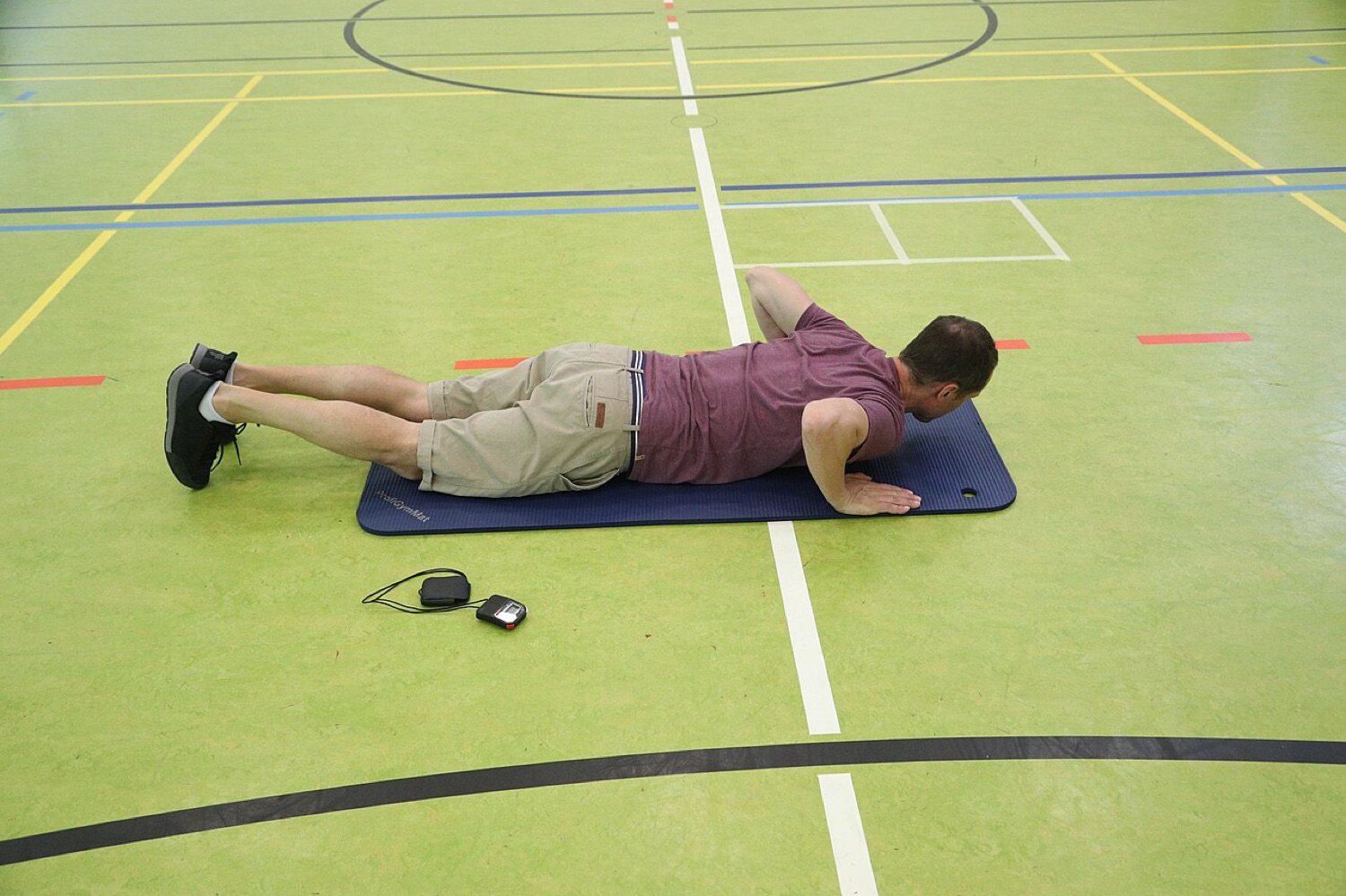
Push-ups are one of the best exercises ever invented. You need no equipment, you can do them anywhere, they train your chest, shoulders, arms and core at once, and there are dozens of variations. But plenty of people do them wrong, which wastes effort and can strain your shoulders or lower back.
What is a push-up?
A push-up is a bodyweight pressing exercise. It is mainly a chest exercise, but it also works the triceps and shoulders, and your abs, glutes and legs have to work to hold your body in a straight line. That makes it a genuine whole-body move.
Setting up
- Hands: on the floor slightly wider than shoulder-width, roughly under your shoulders, fingers spread comfortably.
- Head: neutral, eyes looking at the floor slightly ahead. Do not tuck your chin or crane your neck.
- Feet: together or a little apart. A wider stance is more stable and slightly easier.
- Body: a straight line from head to heels.
Your first push-up
- Start with straight arms. Squeeze your glutes and brace your abs.
- Breathe in and lower yourself under control until your elbows are at about 90 degrees, or your chest is a few centimetres off the floor. Keep your elbows angled back at roughly 45 degrees rather than flared out to the sides.
- Breathe out and press back up to straight arms.
Do as many as you can with good form. If that is two or three, great. Plenty of people start at zero and work up to 20 or more in a few months.
Easier progressions
The goal is three sets of 15 standard push-ups. Work through these stages, moving up when you can do three sets of 15 with a minute's rest between sets. Practise every other day.
Stage 1: wall push-ups
Stand facing a wall, hands on it slightly wider than your shoulders, and walk your feet back until you are leaning. Lower your chest towards the wall, then push back.
Stage 2: incline push-ups
Put your hands on a sturdy bench, table or stair. The lower the surface, the harder it gets.
Stage 3: knee push-ups
On the floor, but supporting your lower body on your knees. Keep a straight line from head to knees and go all the way down.
Common mistakes
- Sagging hips or a piked backside. Squeeze your glutes and brace your abs to stay in a plank.
- Hands too far forward. Keep them roughly under your shoulders.
- Half reps. Go to the depth you set as your standard. A shallow rep does not count.
- Holding your breath. Breathe out on the way up.
- Fudging the numbers. If you did ten, you did ten.
The push-up bet
Push-up challenges spread around offices and gyms for a reason: they are easy to count, impossible to fake in front of witnesses and perfect for a small friendly wager. "First one to 50 straight push-ups buys lunch" has motivated more people than most gym memberships. Programmes such as the well-known "hundred push-ups" challenge give everyone the same plan, so the bet is about consistency rather than who started strongest.
Behavioural economists would not be surprised. Having something small on the line, especially in front of colleagues, makes skipping a session feel like a loss rather than a non-event. Keep the stakes small and social, set handicaps so beginners can win, and celebrate progress as much as the winner. We share formats that work, and the ones that end in sore shoulders and sore feelings, in office fitness challenges and friendly wagers.
Tips for better push-ups
- Practise. Many people take months to do their first full push-up. Keep going.
- Strengthen your core. Planks help you hold the straight-body position.
- Add pressing work such as bench or dumbbell presses if you go to a gym.
- Track it. Write down your sets and reps so you can see progress.
Once standard push-ups are easy, try decline, diamond, wide, archer or plyometric push-ups. There is always another level.
This article is general information, not medical advice. Check with a doctor before starting a new diet or exercise programme, especially if you have a health condition.